- Jun 23
The Nose Knows: Is Your Dog Really Distracted?
The Difference Between Investigating and Ignoring You
"He's so distracted."
It's one of the most common things I hear from dog owners.
Their dog stops to sniff every tree.
They become fascinated by a patch of grass.
They suddenly pull toward a scent trail that seems completely unimportant to us.
And the conclusion is often immediate:
"My dog isn't paying attention."
"My dog is ignoring me."
"My dog is distracted."
But what if that's not what's actually happening? What if your dog is doing exactly what dogs were designed to do?
This month, as we continue exploring The Nose Knows, I want to invite you to put on a new hat: The Behavior Detective hat. Because sometimes what looks like distraction is actually investigation.
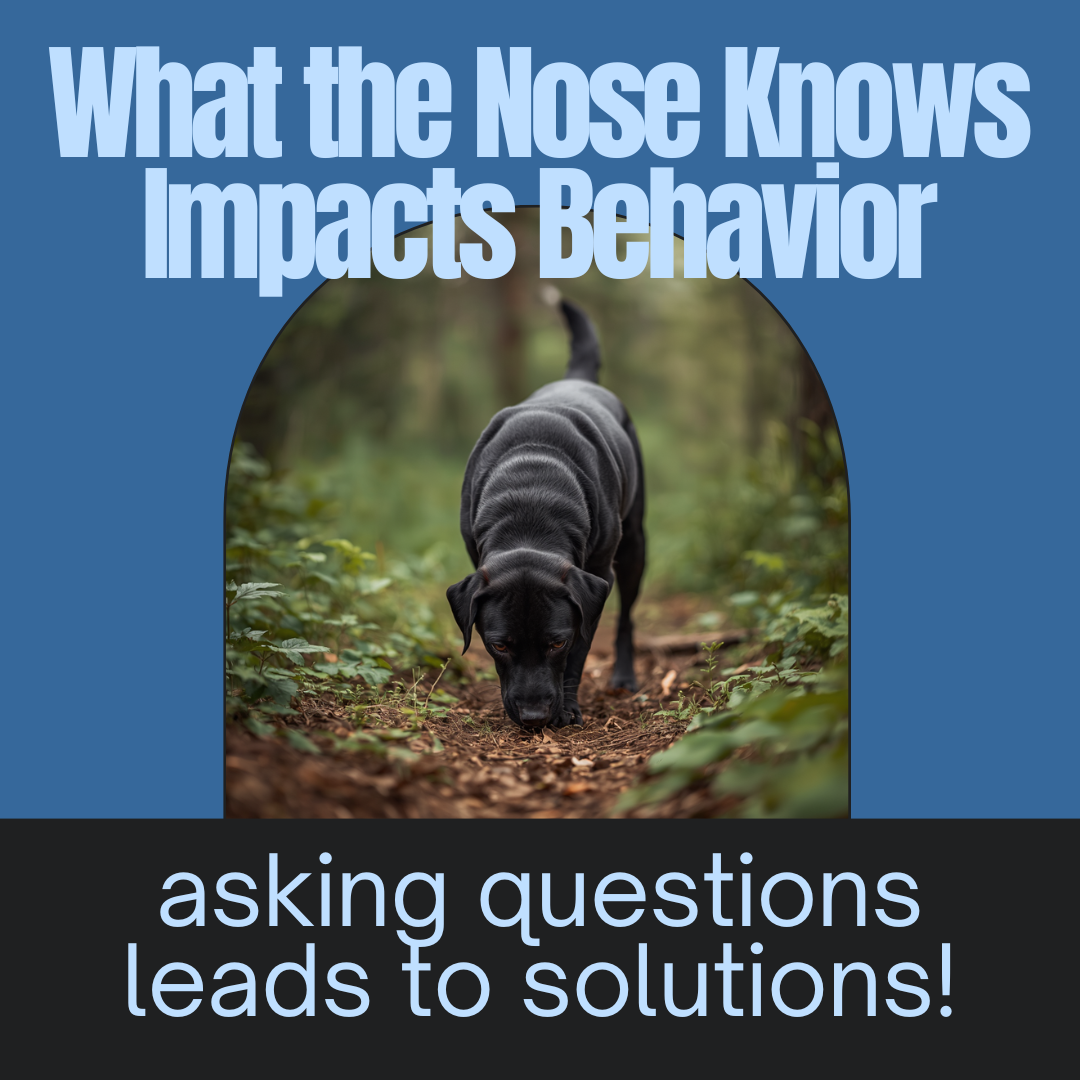
The Difference Between Distraction and Investigation
When most people use the word "distracted," they mean their dog is paying attention to something other than them. But from the dog's perspective, that "something" may be incredibly important.
Imagine walking through a parking lot and hearing someone call your name. Would you be distracted if you turned to look? Or would you be responding to information that seemed relevant?
Dogs are constantly making those same decisions. Only instead of using their eyes and ears first, they often use their nose. Every scent contains information.
Who was here?
What happened?
Is this familiar?
Is this safe?
Should I pay attention?
When your dog pauses to investigate a scent, they may not be choosing to ignore you. They may simply be gathering information about the environment. The Nose Knows how to investigate.
Becoming a Behavior Detective
One of the most powerful mindset shifts a dog owner can make is moving from judgment to curiosity.
Instead of asking: "How do I stop this behavior?"
Try asking: "What purpose might this behavior serve?"
That's the heart of becoming a Behavior Detective.
Behavior always provides clues. When a dog is pulling toward a scent, slowing down to investigate, or repeatedly returning to the same area, they are often telling us something. Our job isn't to immediately stop the behavior. Our job is to understand it. The more information we gather, the better decisions we can make.
The CAKES Framework and Understanding Behavior
Compassion: Compassion reminds us that dogs are not trying to make our lives difficult.
They are responding to the world with the tools nature gave them. Before assuming disobedience, consider what need your dog may be trying to meet.
Awareness: Awareness helps us notice patterns.
Does your dog sniff more in unfamiliar environments?
After seeing another dog?
Near busy roads?
Around certain smells?
The more aware we become, the more clues we discover.
Knowledge: Knowledge helps us understand why behavior happens.
Dogs experience the world differently than humans do. When we learn about canine scenting and environmental processing, many behaviors begin to make much more sense.
Empathy: Empathy allows us to view situations from our dog's perspective.
What information might they be gathering?
What might they be trying to understand?
What would the environment feel like if you experienced it primarily through scent?
Support: Support means helping our dogs succeed.
Sometimes that means creating opportunities to investigate. Sometimes it means teaching engagement skills. And sometimes it means finding a balance between exploration and focus.
Support isn't about eliminating natural behavior, it's about helping dogs navigate the human world while still honoring their canine needs.
Information Gathering Is Not Disobedience
One of the biggest mistakes we can make is assuming every pause, sniff, or environmental check-in is a training problem. Often, it's simply information gathering. In fact, many dogs focus better after they've had an opportunity to investigate.
Think about how difficult it would be to concentrate on a conversation if you were constantly wondering what was happening around you.
Dogs are no different. The more information they gather, the easier it often becomes to settle, engage, and learn. This doesn't mean we allow unlimited sniffing whenever the dog wants. It means we recognize the value behind the behavior. Because when we understand the need, we can teach more effectively.
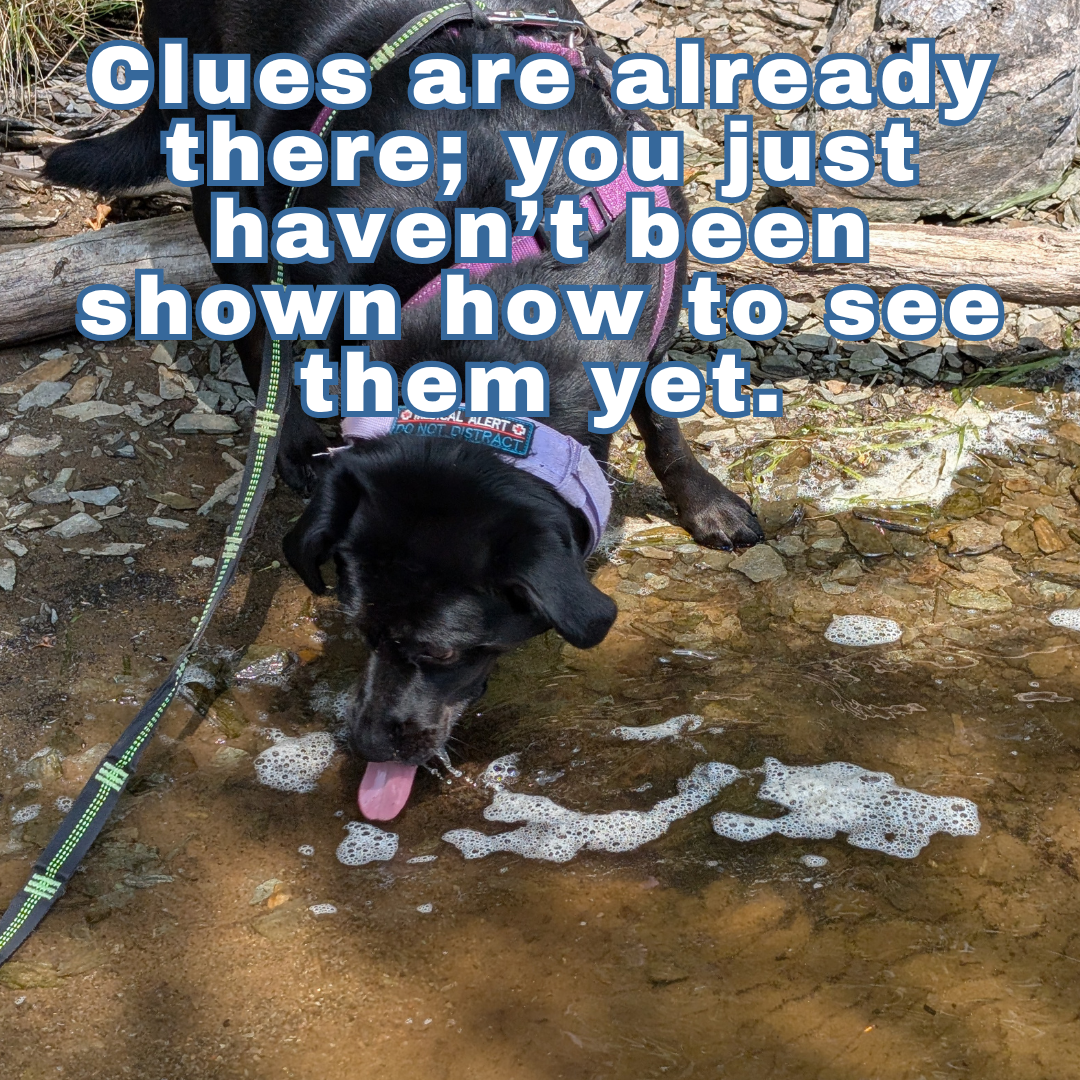
From Distracted to Connected
The goal isn't to stop dogs from using their nose. The goal is to teach dogs how to balance investigation with engagement.
How to gather information and reconnect.
How to explore and communicate.
How to investigate and still function as a team.
That's where real-life skills begin; when we stop seeing distractions and start seeing opportunities to learn.
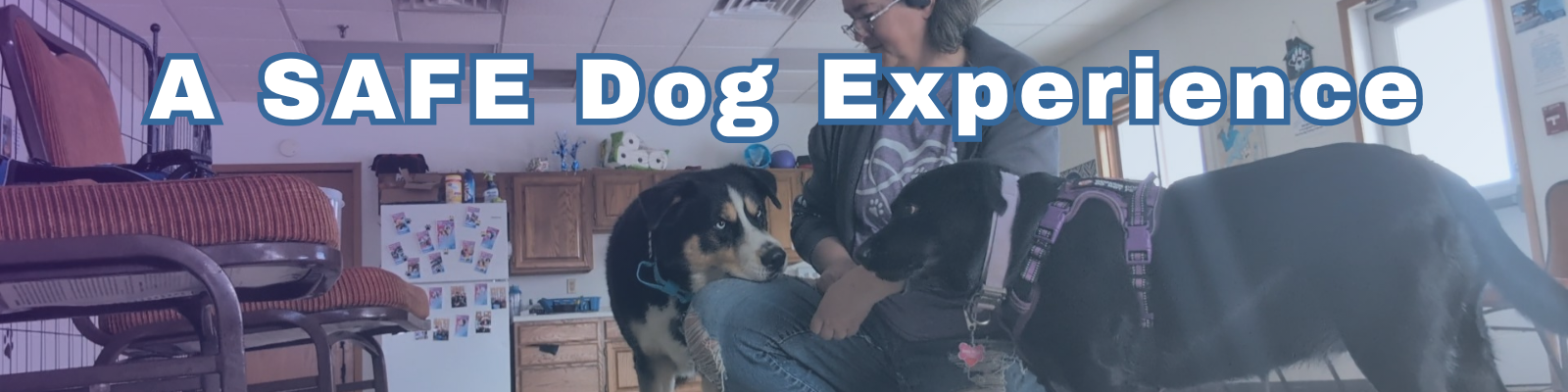
Ready to Become a Better Behavior Detective?
If you've ever wondered: "Why does my dog seem so distracted on walks?" or "How can I help my dog focus without constantly correcting them?" I invite you to join me for the upcoming SAFE Dog Experience. We'll explore these concepts in much greater depth through two free workshops:
A SAFE Walk
Discover how Security, Attachment, Functional Skills, and Expanding Environments can transform your walks from frustrating to fulfilling.
SAFE & Less Distracted
Learn how to identify what your dog is investigating, improve engagement, and build practical skills that create calmer, more connected walks.
Because when we stop asking, "How do I stop my dog from being distracted?" and start asking, "What is my dog trying to tell me?" everything begins to change.
The Nose Knows. And the best Behavior Detectives learn to follow the clues. 🐾