- Aug 7
Designing Training Sessions That Help Both Ends of the Leash Feel SAFE
Have you ever spent time planning the perfect training session, only to wonder what happened five minutes after you clipped on the leash?
Your dog couldn't focus.
You became frustrated.
The environment felt chaotic.
The treats that usually worked suddenly weren't interesting.
The behavior you practiced so well at home seemed to disappear.
It happens to all of us. The question isn't whether you chose the wrong cue or the wrong reward. The better question is: Did we create the conditions for success before we ever started training?
This month, as we explore our Train Smarter, Not Harder theme, I'd like to invite you to think differently about dog training.
Not as a series of commands to teach or a checklist of behaviors to perfect, but as a process of becoming a Behavior Detective.
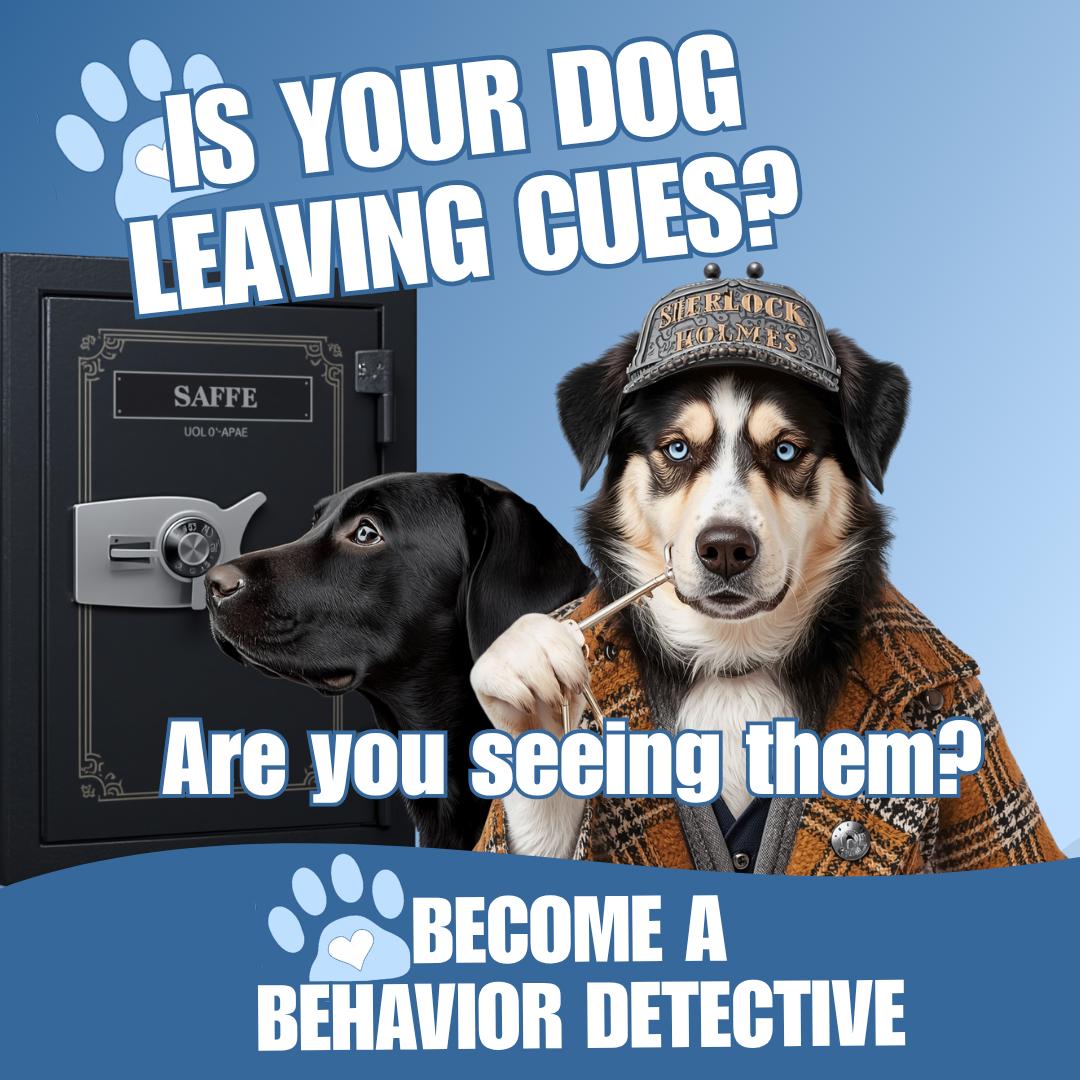
Every successful Behavior Detective begins the same way, gathering clues before jumping to conclusions.
Instead of asking..."How do I get my dog to do this?"
they ask..."What do I need to understand before I ask my dog to learn?"
That simple shift changes everything.
Becoming a Behavior Detective
One of the biggest mistakes I see isn't poor training, it's skipping the investigation. Many of us begin planning a session by choosing the behavior we want to practice; loose leash walking, recall, stays, greeting politely, etc.
Those are wonderful goals, but they're only one piece of the puzzle. Behavior Detectives know that successful training begins long before the first cue is ever given. Before we can Crack the Code, we first have to gather the clues that help us build a successful game plan. That starts by unlocking the first SAFE Key.
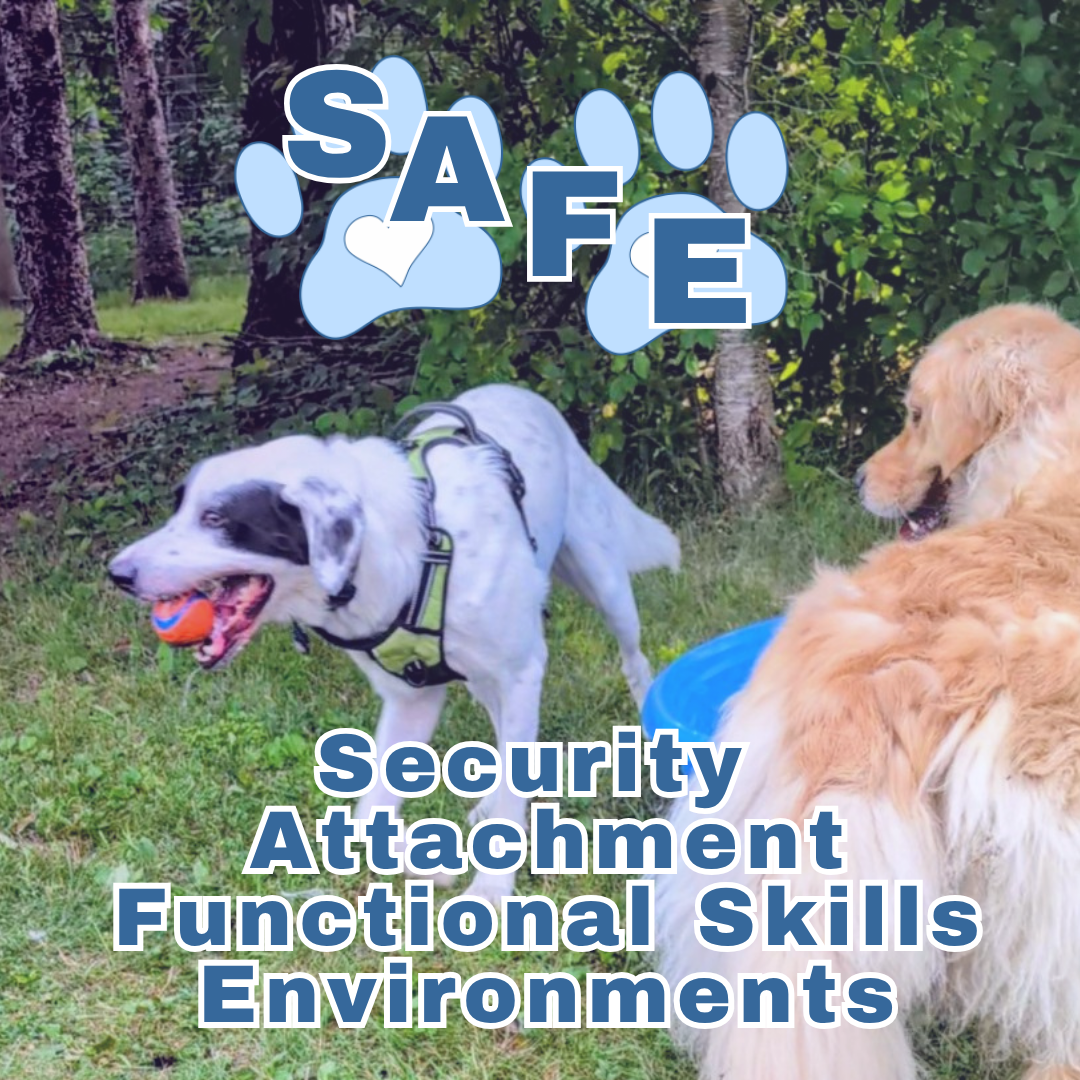
Security
Security isn't simply about keeping your dog physically safe. It's about creating an environment where both ends of the leash can learn, communicate, and grow together.
Unlocking the First SAFE Key
As Behavior Detectives, our first job isn't teaching, it's designing success.
Before every training session, I encourage you to pause and investigate four important clues. These clues become the foundation for everything that follows.
🔍 Clue #1: What emotional state are we BOTH bringing into today's session?
We spend a lot of time talking about our dog's emotional state, but what about ours?
Did you rush home from work? Are you feeling stressed? Frustrated? Distracted?
Trying to squeeze in "just one quick session" before dinner?
Dogs are incredible observers. They notice our breathing, our body language, our timing, and even the tension we carry on the leash.
Then investigate your dog.
Are they curious? Relaxed? Excited? Unsure? Overwhelmed?
Ready to play?
Both of you bring emotions into every training session. The smartest trainers don't ignore those emotions. They plan around them.
🔍 Clue #2: Does today's environment match today's goal?
One of the smartest changes you can make isn't changing your dog, it's changing the environment.
Ask yourself:
What distractions are likely to be here?
How might this environment affect my dog's emotional state?
Is this the right place for today's lesson?
Have we been successful here before?
A new skill deserves a familiar environment. A familiar skill can handle a slightly bigger challenge. Instead of making everything harder at once, increase only one variable at a time. Whether it's the environment, distractions, or the skill itself, changing just one element helps both you and your dog build confidence together. That's what training smarter looks like.
🔍 Clue #3: What safety nets have I built into our plan?
Creating Security isn't about avoiding challenges, it's about planning for them.
Ask yourself:
Do we need more distance?
Would a longer leash give us more freedom?
Would a shorter leash improve safety?
Do I have reinforcement that matches today's challenge?
Have I planned for water breaks and shade on a hot summer day?
What's my exit strategy if today becomes too much?
Management isn't admitting failure. Management is creating success before problems happen. When we intentionally choose our equipment, reinforcement, and expectations to match the environment, we're giving ourselves and our dogs the best opportunity to succeed.
🔍 Clue #4: What will success look like today?
This might be the most important clue of all. Too often, we define success by whether our dog performed the behavior perfectly. Behavior Detectives measure something different.
Did my dog recover more quickly after a distraction?
Did they choose to check in with me?
Did they investigate something new with confidence?
Did I communicate clearly?
Did we both enjoy learning together?
Sometimes success isn't a perfect recall. Sometimes success is simply creating one more positive experience than we had yesterday. That's how confidence grows, trust grows. And teams grow together.
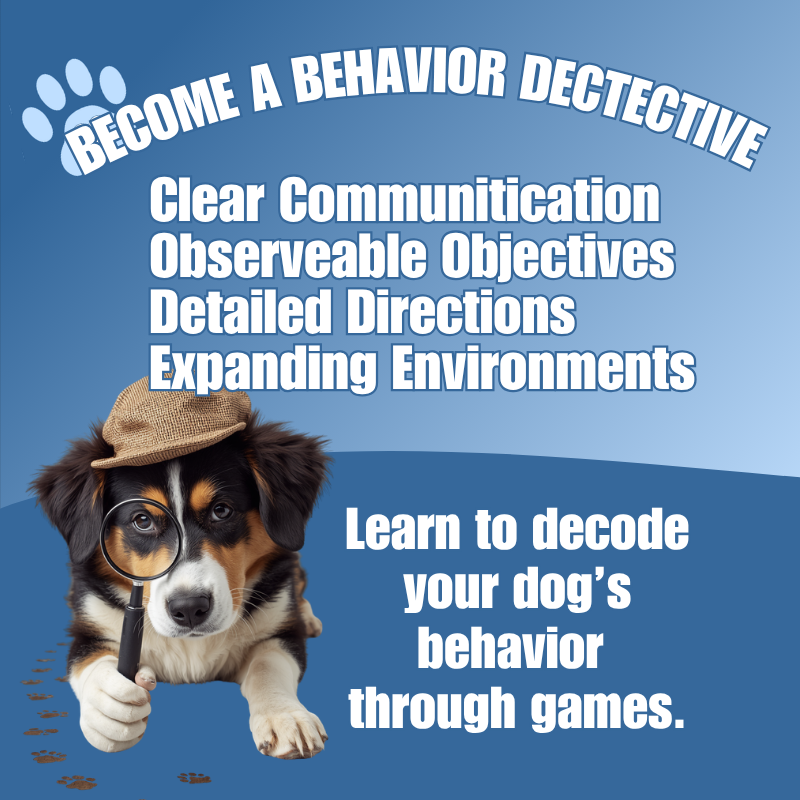
Crack the Code
Now that you've gathered your clues and unlocked the Security Key, it's time to Crack the Code. This is where planning becomes action. Rather than hoping your dog succeeds, create a game plan that gives them every opportunity to succeed.
🔎Communicate clearly.
🔎Choose one observable goal.
🔎Keep your directions simple.
🔎Expand the challenge only after you've found success together.
That's what it means to train smarter, not harder.
Your Behavior Detective Challenge
This week's mission is simple. Set out a kiddie pool, shallow water tub, sprinkler, or another safe water feature.
Your first goal isn't to encourage your dog into the water. Your first goal is to gather the clues you need by simply watching what your dog chooses to do with the water when they see it.
Observe how your dog interacts before you create a plan to train behaviors around the water source.
Notice:
How does your dog approach something new?
Do they investigate immediately or from a distance?
What helps them feel confident?
When do they choose to engage?
What reinforcement keeps them connected with you?
There's no right or wrong answer. You're simply adding more evidence to your Behavior Detective notebook. Every clue you gather today will help you create even more successful training sessions tomorrow.
Lucius being a young puppy has already developed a great deal of trust in me. So I allowed him a few days to watch Belle approach our backyard kiddy pool and he had been using it for drinks of water for several days. I decided it was time to see how he would react to getting his feet wet so I picked him up and slowly lowered him into the pool. If he showed stress in any way, I would have removed him immediately, but he didn’t so I gently put him in the pool that contained about 2 inches of water in the bottom.
He learned immediately how to get out of the pool. But that’s when something amazing happened. Once he knew he could climb out on his own, he turned right around and climbed back in. Within seconds he was plunging his face into the water to pull the ball out of the water. He was loving fishing the balls out so Belle and I kept putting the balls back in making it a wonderful game for the young pup.
Creating Success Together
Every great partnership begins with understanding. When we slow down long enough to investigate before we teach, we stop reacting to behavior and start designing success. That's what the first SAFE Key is all about. Not making training easier, but making learning possible.
This month, I challenge you to become more than a dog trainer.
Become a Behavior Detective.
Gather the clues.
Unlock the SAFE Keys.
Crack the Code.
Create Success Together.
Ready to Unlock More SAFE Keys?
If you'd like a simple roadmap for developing the SAFE Keys to success on your walks and build confidence, strengthen connection, and help both ends of the leash succeed, sign up for the SAFE Dog Experience taking place later this month.
It's designed to help you begin thinking like a Behavior Detective and start creating success, one SAFE Key at a time.